CLIENT:
DERMAESTHETICS (DBH)
YEAR:
2023 - 2025
ROLE:
Product / UX Designer
TOOLS:
Figma, Illustrator, Photoshop
SCOPE:
Information Architecture · System Design · Operational UX
System Design: Standardizing Professional Treatment Protocols
Overview
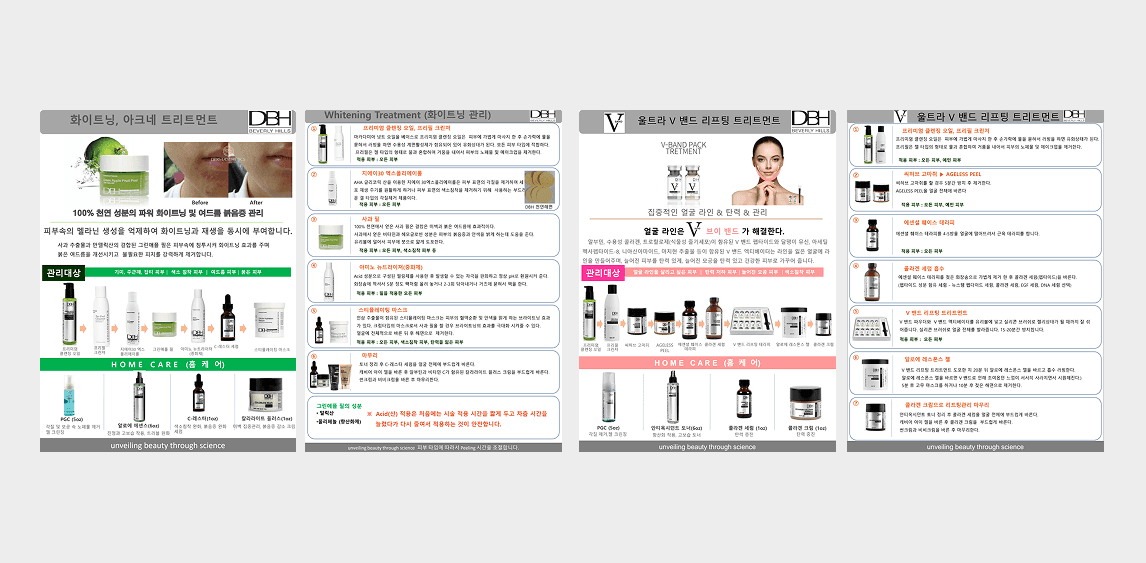
As the professional treatment lineup expanded, protocol documentation became fragmented across leaflets, brochures, and verbal explanations.
Practitioners relied heavily on memory or repeated guidance from sales representatives, resulting in inconsistent execution and avoidable errors.
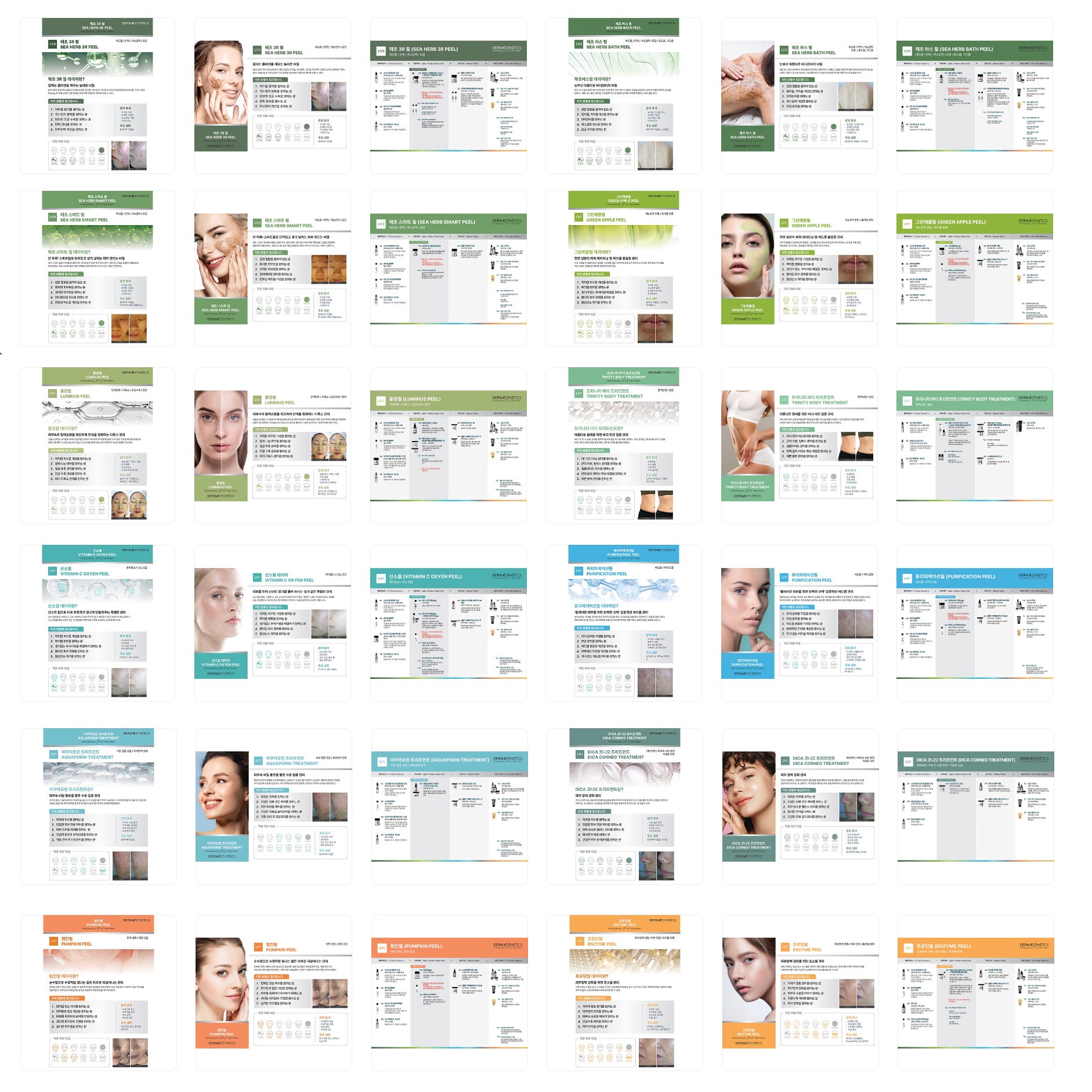
This project focused on redesigning 15 treatment protocols into a single, standardized framework, one that supports learning, real-time execution, and long-term scalability across products and partners.
Background
When Expertise Relied on Memory
As the number of professional users increased, protocol knowledge was distributed across disconnected formats, including printed materials, PDFs, and verbal explanations.
Critical steps, especially pre- and post-treatment care, were frequently misunderstood or skipped, not due to lack of expertise, but due to the absence of a shared structure.
Core UX Problem
Information Without a Predictable Structure
Each treatment protocol followed a different layout and hierarchy.
Critical steps were visually indistinguishable from optional ones, and practitioners depended on verbal explanations that were easy to forget in real-world treatment settings.
The core problem was not the amount of information, but the lack of a predictable structure that supported decision-making during live procedures.
Key Insight
Practitioners don’t need more information. They need a repeatable mental model….
Without a consistent framework, even experienced users struggled to apply protocols reliably during actual treatments.
System Design Approach
A Standardized Protocol Framework
All 15 treatment protocols were reorganized into a fixed, repeatable structure that mirrors the actual treatment flow.
Each protocol followed the same sequence:
Treatment Overview & Purpose
Target Skin Conditions
Pre-Treatment Care
Active Treatment Steps
Post-Treatment Care
Precautions & Contraindications
Expected Results
This structure allowed practitioners to quickly scan, anticipate next steps, and apply protocols consistently without relying on external explanations.
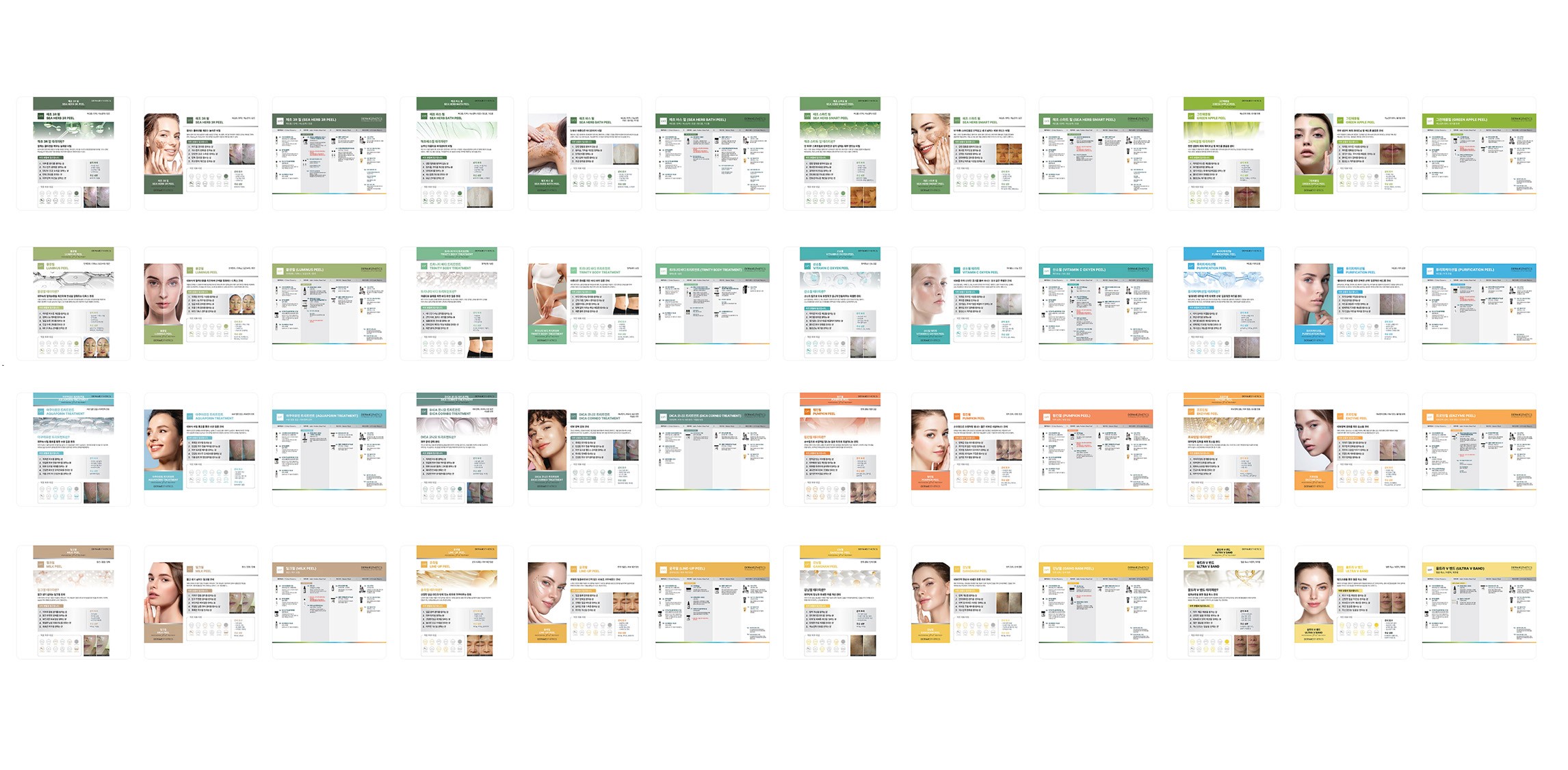
In addition, each protocol was assigned a distinct color and positioned along a continuous gradient spectrum, enabling rapid recognition of available treatments and easier recall within a large and growing system.
Information Architecture Shift
From Fragmented Information to a Unified System
Before
Disconnected leaflets and brochures
Inconsistent layouts and information depth
No clear separation between preparation, execution, and recovery
After
A unified protocol system
Stage-based hierarchy aligned to real treatment flow (Before / During / After)
Color-coded gradient system that visualizes treatment variety and sequence at a glance
By aligning information architecture with treatment stages, the system reduced cognitive load while improving consistency and scalability.
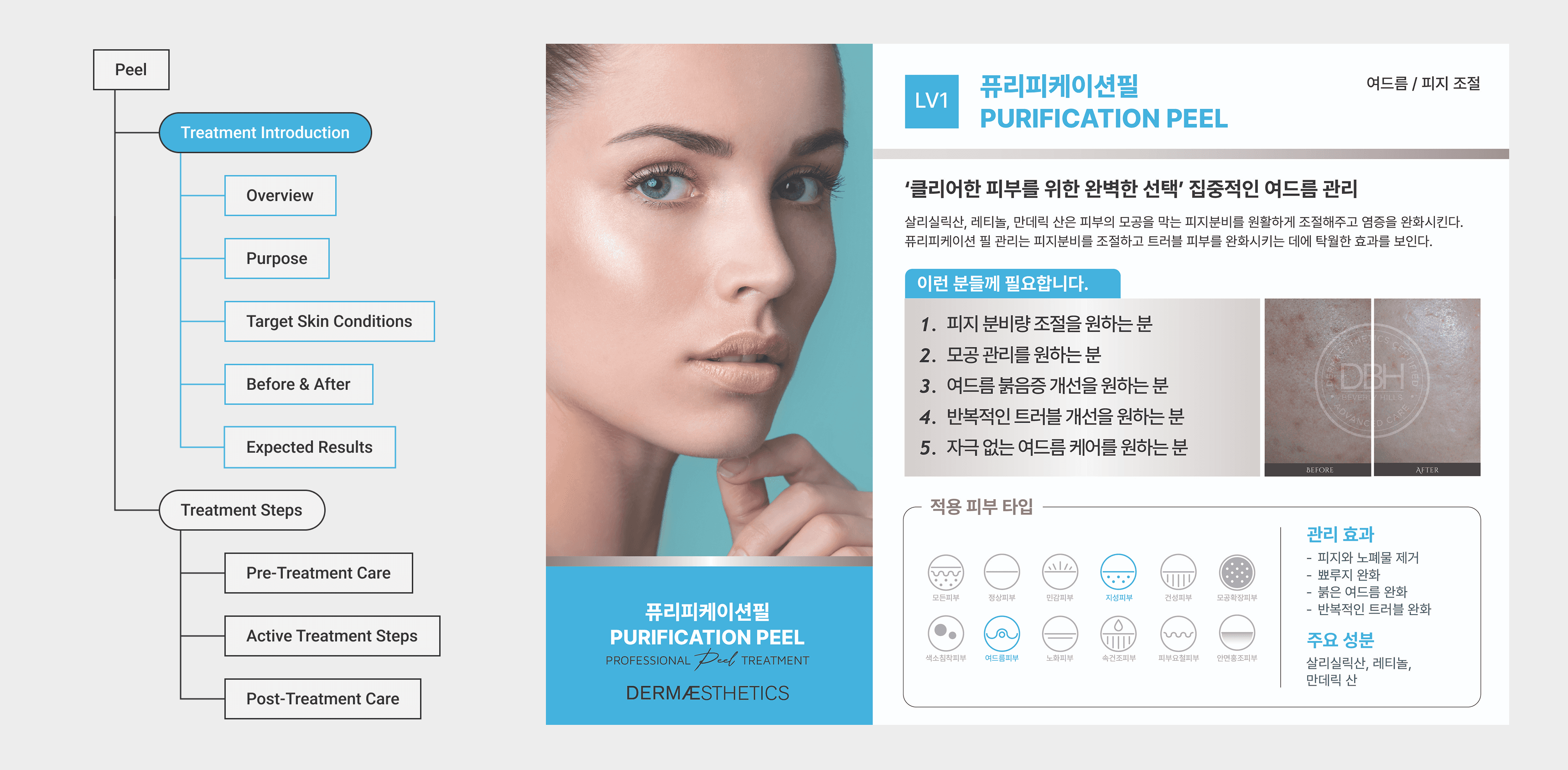
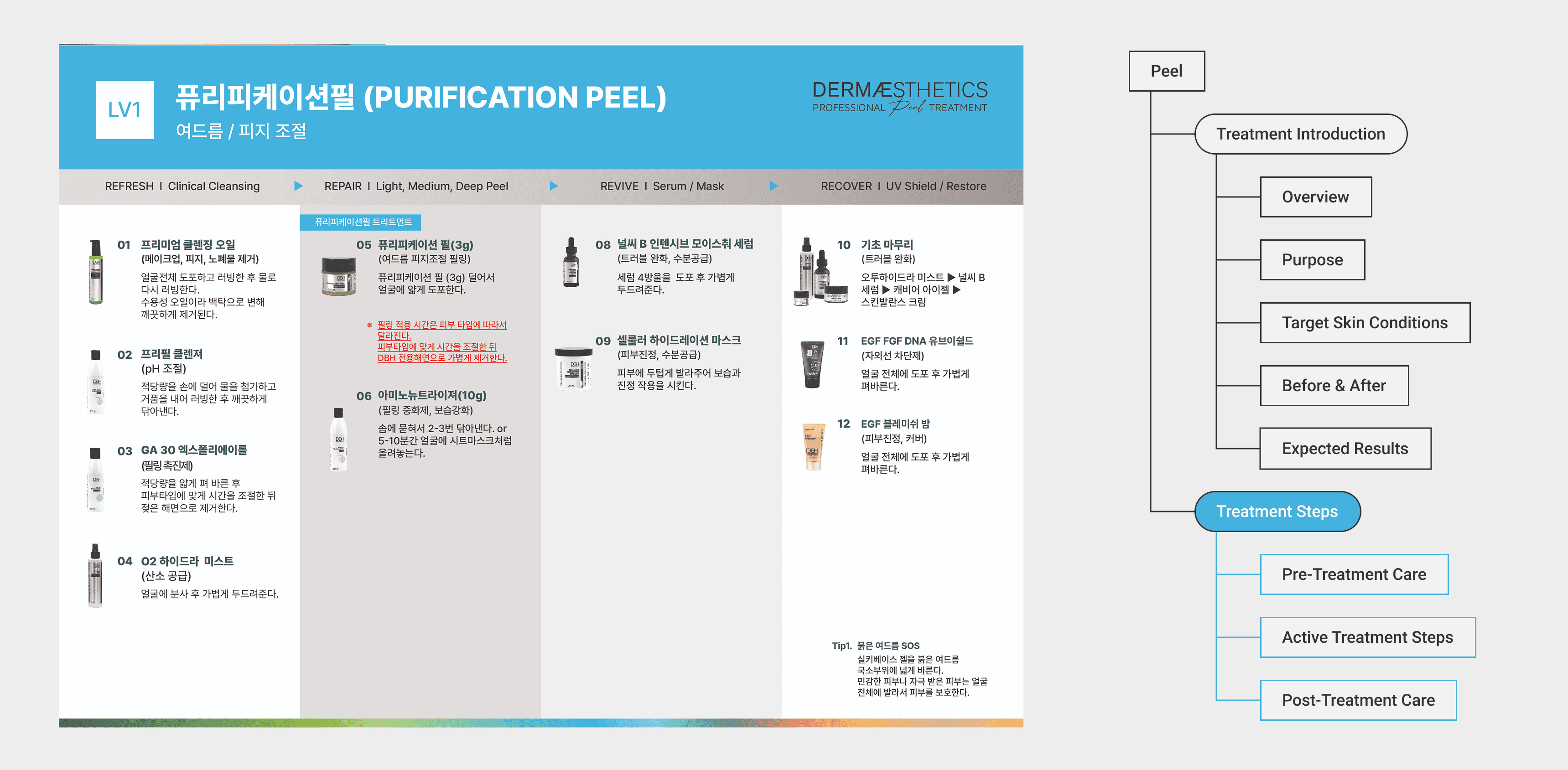
Color-coded gradients support rapid recognition and recall across a large set of treatment protocols.
Outcome & Impact
Reduced dependency on verbal explanations
Faster onboarding for new professional partners
More consistent treatment execution across users
Lower operational burden on sales and support teams
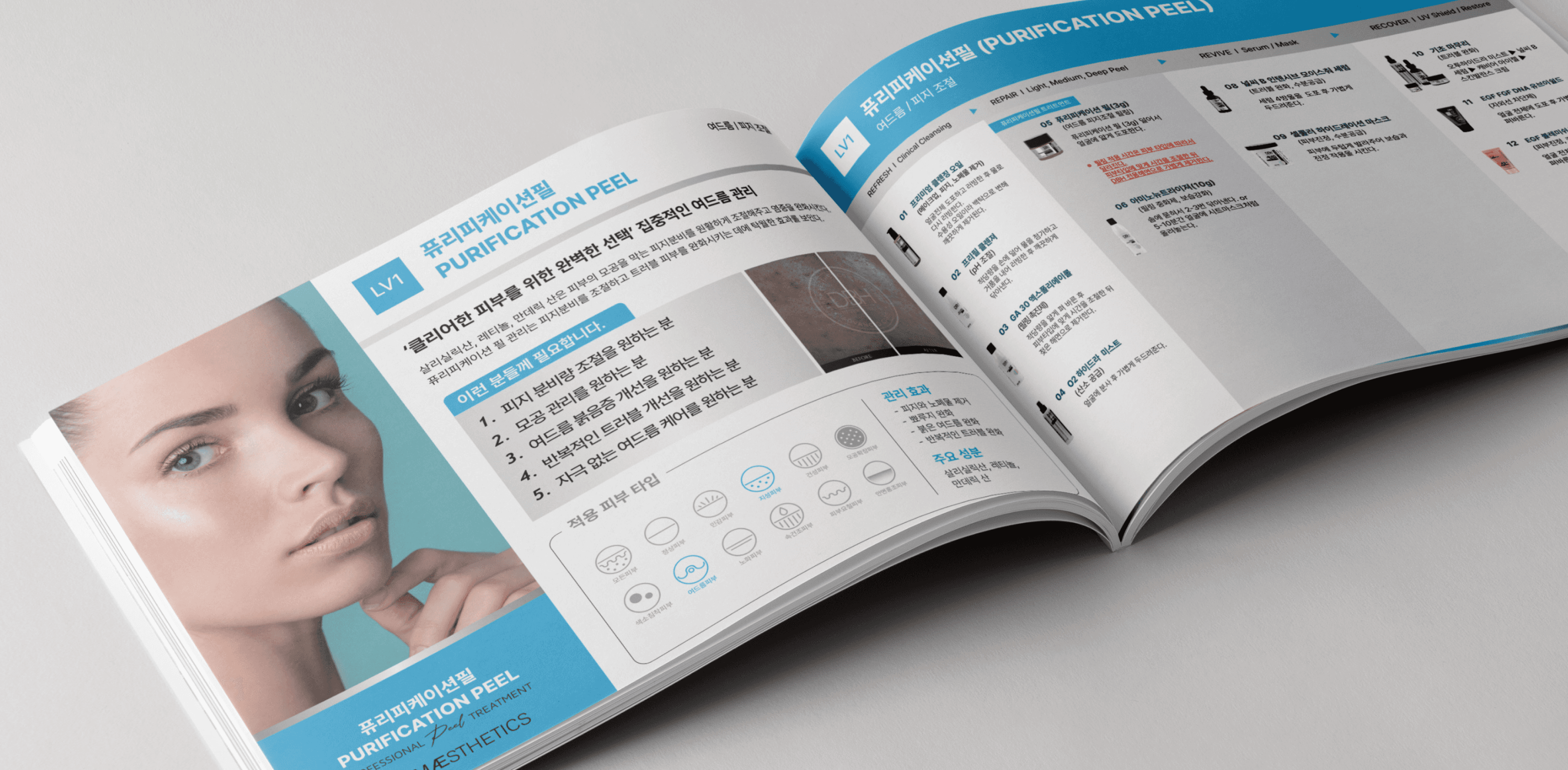
Structure replaced explanation.
Reflection
This project reinforced that system design is not about simplifying complexity,
But about organizing it so that the correct actions become obvious.
The treatment protocols themselves did not become simpler.
What changed was how practitioners understood, navigated, and executed them in real-world settings.
By shaping structure around complex clinical knowledge,
The system enabled consistent outcomes without increasing cognitive or operational burden.